Urban Tree Management supports discerning clients who understand that thriving trees and landscapes enhance our lives.
Soil and Root Health in the Mid-Peninsula
Healthy trees begin below the surface. While canopies and trunks are the most visible parts of a tree, the soil and root system form the foundation that supports the overall structure, longevity, and resilience of a tree. In Woodside and throughout the Mid-Peninsula, trees face increasing pressure from development, prolonged dry seasons, and compacted soils. Proactive soil and root care is essential for preserving mature trees and maintaining safe, thriving landscapes.
Urban Tree Management provides professional soil and root health services designed to support long-term tree vitality. By addressing problems at their source, we’ll help you improve tree performance, reduce risk, and extend the life of valuable trees across residential, commercial, and estate properties.
Understanding Tree Soil and Root Systems
Tree root systems are complex and sensitive. While large structural roots anchor the tree, the majority of nutrient and water absorption occurs through fine feeder roots located close to the soil surface. These roots rely on quality soil, adequate oxygen, and consistent moisture to function effectively.
Healthy soil contains a balance of organic matter, air spaces, and microorganisms. When soil becomes compacted, overly dry, or depleted of nutrients, root growth slows and stress quickly increases. Over time, compromised root systems can lead to visible decline above ground, including thinning canopies, reduced growth, and increased vulnerability to pests and disease.
Common Soil and Root Health Challenges in Woodside and the Mid-Peninsula
Trees in Woodside and nearby South Bay communities face several region-specific challenges that impact soil and root health.
Urban Environment
Compacted soils are common due to our urban landscape, which means constant construction activity, foot traffic, and vehicle use near trees. Compaction reduces oxygen availability and limits root expansion, making it difficult for trees to absorb water and nutrients.
Dry Climate
Extended dry periods also place stress on root systems, especially when irrigation practices aren’t able to reach the active root zone. Poor drainage can further complicate the situation, leading to oxygen-starved soils during wet periods and hardened soil during dry seasons.
Hardscapes
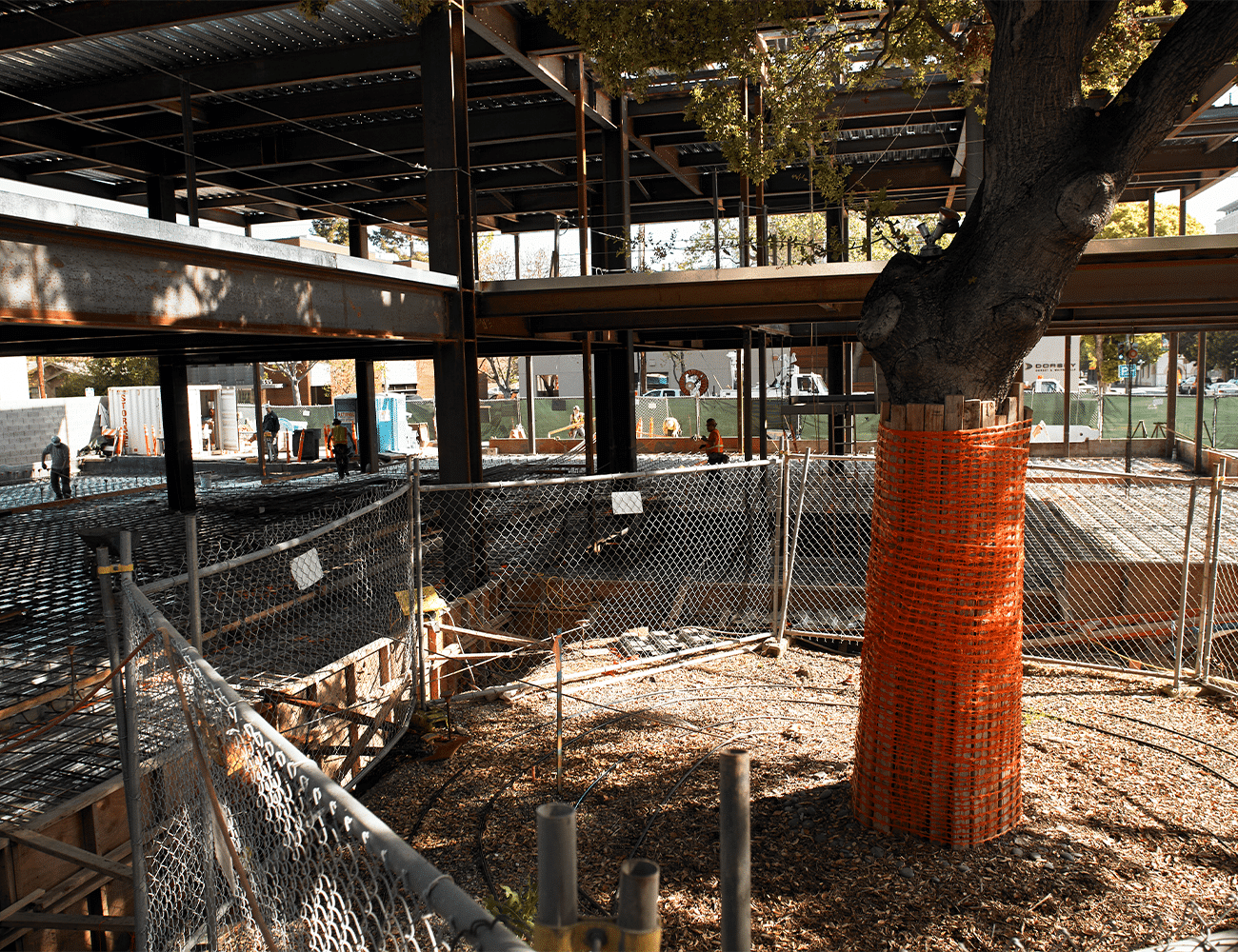
Urban and suburban landscapes often restrict natural root growth due to hardscapes, grading, and limited planting areas. Roots may also be damaged during trenching or landscaping projects, which can destabilize trees and create long-term health issues if not addressed.
Signs Your Trees May Have Soil or Root Health Issues
Soil and root problems often develop gradually and can be hard to identify, but there are several warning signs that property owners should pay attention to. Trees experiencing below-ground stress may show sparse foliage, off-color leaves, or premature leaf drop. Growth may slow, and sections of the canopy may begin to die back.
Fungal growth near the base of a tree, exposed roots, or a noticeable lean can indicate compromised root systems. Trees under root stress are also more susceptible to insect infestations and disease. These symptoms often become more pronounced during drought or heat events, making early diagnosis critical.
Professional Soil and Root Health Services Offered by Urban Tree Management
Soil Health Evaluation and Diagnostics
Urban Tree Management begins with a thorough evaluation of soil and root conditions. This includes visual inspections, soil assessments, and identification of compaction, drainage issues, or nutrient imbalances. Understanding the specific conditions affecting each tree allows for targeted solutions that support long-term health.
Aeration
Compacted soils are one of the most common threats to tree vitality in the Mid-Peninsula. Professional soil decompaction and aeration services help restore airflow and improve water infiltration within the root zone. By reducing soil density, roots can expand more easily and absorb essential resources more efficiently.
Organic Amendments
Improving soil structure sometimes requires the addition of organic materials that enhance microbial activity and nutrient availability. Urban Tree Management uses science-based soil conditioning techniques to support beneficial organisms and improve moisture retention. These treatments create healthier growing conditions that benefit trees over the long term rather than offering short-lived results.
Deep Root Fertilization
Tending to roots is essential, especially in the South Bay Area, where we alternate between exceptionally dry and wet seasons. With deep root fertilization, we’re able to get through dense, compacted soil and get to the active root zone, delivering nutrients where they’re needed most.
The Role of Soil and Root Health in Tree Risk Management
Root health plays a direct role in tree stability and safety. Trees with compromised root systems are more susceptible to failure during storms, high winds, or saturated soil conditions. Addressing soil and root issues early can reduce the likelihood of unexpected tree failures and costly emergency services.
For large, mature, or heritage trees common in Woodside and the Mid-Peninsula, proactive root care is especially important. Strengthening root systems improves anchorage and helps trees better withstand environmental stressors over time.
Benefits of Proactive Soil and Root Care
Investing in soil and root health offers lasting benefits for both trees and property owners. Healthy roots support stronger growth, fuller canopies, and improved drought tolerance. Trees that receive proper below-ground care are less likely to require removal and often respond better to pruning and other maintenance services.
Well-maintained trees enhance property value, improve curb appeal, and contribute to a healthier local ecosystem. Proactive care also helps preserve mature trees that provide shade, privacy, and character to landscapes throughout the Mid-Peninsula.
Why Choose Urban Tree Management in Woodside and the Mid-Peninsula
Urban Tree Management brings local expertise and a preservation-focused approach to every project. With a deep understanding of regional soil conditions and native tree species, our team provides solutions tailored to the unique challenges of Woodside and surrounding communities.
Certified arborists use industry best practices and science-backed methods to support sustainable tree health. Whether caring for residential landscapes, commercial properties, or large estates, we’re committed to responsible, long-term tree care.
Serving Woodside and Surrounding Mid-Peninsula Communities
Urban Tree Management proudly serves Woodside and nearby areas throughout the Mid-Peninsula, including Menlo Park, Atherton, Palo Alto, and Redwood City. Each property receives customized care based on site conditions, tree species, and long-term goals.
Schedule a Soil and Root Health Consultation
Strong trees start with healthy soil and roots. If your trees are showing signs of stress or if you want to take a proactive approach to preservation, Urban Tree Management is here to help. Contact our team today to schedule a professional soil and root health consultation and protect your trees from the ground up.